Dindigul Seeraga Samba Chicken Biryani
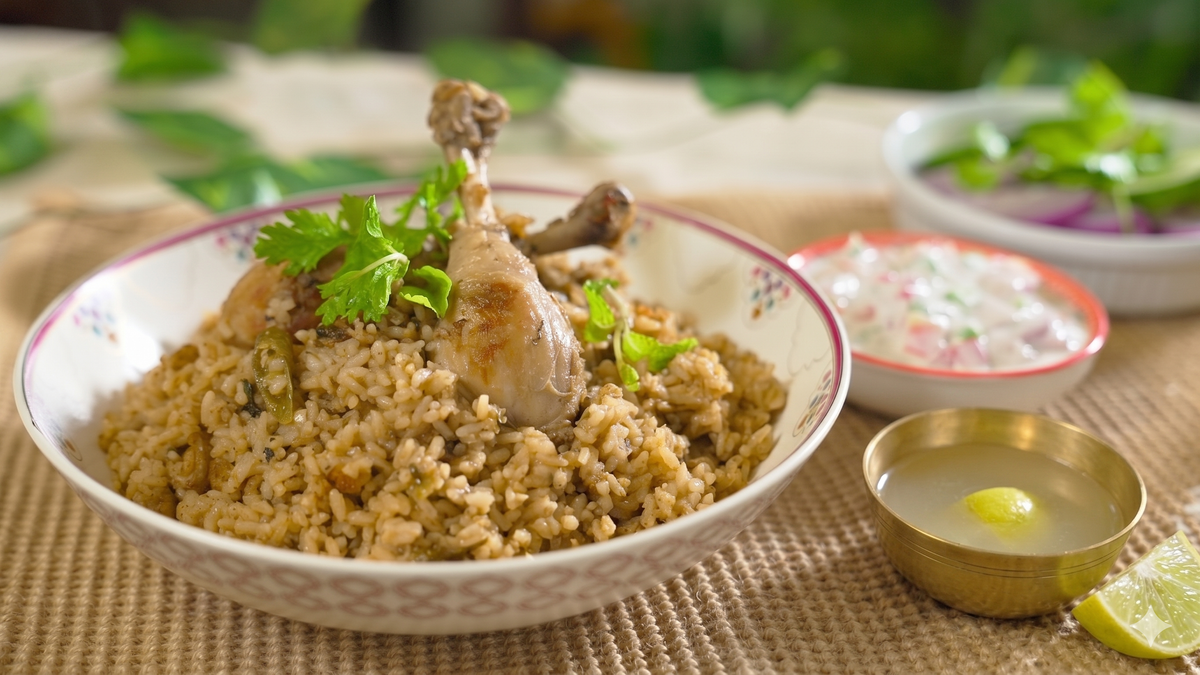


Mention "biryani" and most people picture long, fluffy basmati grains, a fragrant Hyderabadi dum, maybe a delicate saffron streak. Tamil Nadu has a very different answer — and it comes from the town of Dindigul. Here, biryani is smaller-grained, peppery, tangy, and unapologetically rustic. It doesn't try to be elegant. It tries to be unforgettable.
The secret is in three deliberate choices that set it apart from every other regional biryani. Get those right and you've got a dish that's been pulling people off the highway to Dindigul's legendary biryani shops for decades.
What Makes a Biryani "Dindigul"
Three things, and they're non-negotiable:
- Seeraga samba rice — not basmati. This is the heart of it. Seeraga samba is a tiny, dense, short grain named for its resemblance to seeragam (cumin seeds). It won't look like the long, separate strands of a Hyderabadi biryani — it cooks up moister and more compact, and crucially it soaks up far more of the masala. If you substitute basmati, you've made a nice biryani, but not a Dindigul one.
- Freshly ground spice paste — never a packet. The signature flavour comes from dry-roasting cumin, fennel, and black peppercorns and grinding them fresh. That fennel-forward, peppery profile is the taste of Dindigul.
- A tangy curd-and-tomato base with a heavy hand of black pepper. Where many biryanis lean sweet and rich, this one leans sharp and hot. It's meant to be spicier and more rustic — country cooking, not banquet cooking.
💡 Want an interactive version? I can give you this recipe as a step-by-step cooking widget with built-in timers and adjustable servings — just ask.
How to Serve It the Dindigul Way
Biryani here is rarely served alone. The classic accompaniments:
- Onion raita — cooling yoghurt with sliced onion to balance the pepper.
- A boiled egg and a wedge of lemon on the side.
- Brinjal curry (kathirikai) — the traditional, slightly tangy eggplant side that locals consider essential.
Variations Worth Knowing
- Dindigul mutton biryani is arguably the regional favourite — swap in bone-in mutton and extend the cooking time until tender before adding the rice.
- Vegetable version — replace the chicken with mixed vegetables and paneer; reduce the liquid slightly since vegetables release water.
- Heat level — the pepper is meant to be assertive, but adjust the green chilies and peppercorns to your tolerance.
The Bottom Line
Dindigul Seeraga Samba biryani is proof that the best regional food comes from conviction, not compromise. It doesn't chase the elegance of basmati or the richness of a northern dum — it leans into tiny dense grains, fresh-ground pepper-and-fennel heat, and a tangy base, and it's all the better for it. Make it once the proper way, and you'll understand why people in Tamil Nadu argue, with total seriousness, that this is the real biryani.
A regional home-style recipe — exact spice levels and accompaniments vary from town to town and kitchen to kitchen across Tamil Nadu. Treat this as an authentic starting point and adjust the pepper to taste.